7,234 Miles, One Vision: How Pause on Earth Came to Be
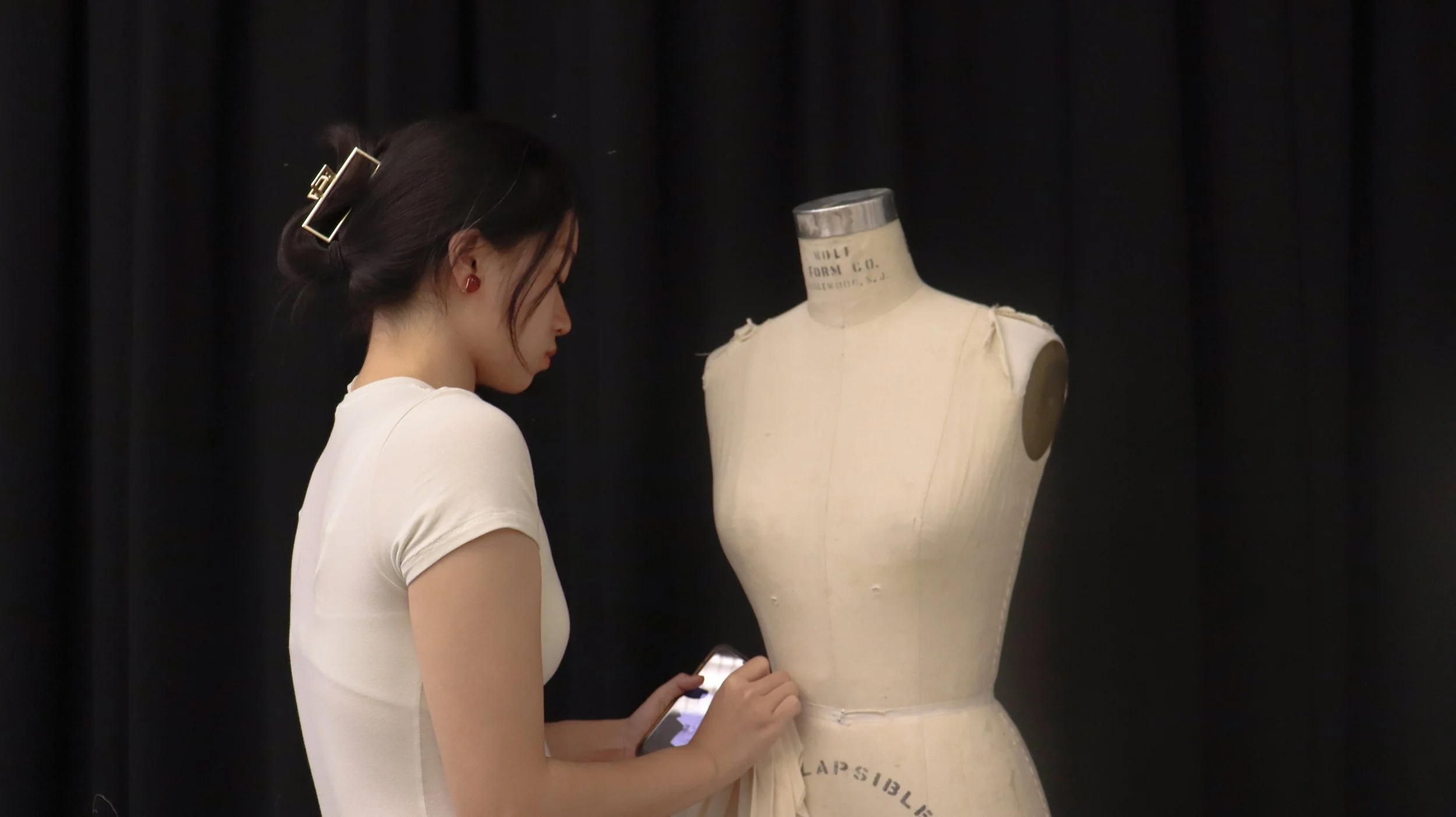
Photo: Yun Zheng
Twenty-year-old designer Yun “Yoyo” Zheng flipped open a ten-inch-thick binder. Threads and lacy material spilled from its plastic sleeves. Off to the side sat her necktie and scarf samples, which, pastel-colored and made of a silky material, are soft to both the eyes and the touch. Zheng’s original fashion print featured seashell ridges and silverware—intricate clusters afloat in a sea of pinks. She then scrolled through her phone’s photo album, showcasing how her multi-purpose bag would scrunch, unfold and scrunch again into a new shape. It is still in the second round of sampling.
Juggling school work during the day and managing sales abroad at night, this twenty-year-old is navigating a thirteen-hour time difference between her Chicago school life and China-based business. The School of the Art Institute of Chicago (SAIC) is holding its twenty-third spring art sale for the public on April 4, hosting over one hundred student vendors, including Zheng. For this SAIC junior and her brand, Pause on Earth, this will be a first step toward expanding her American following.
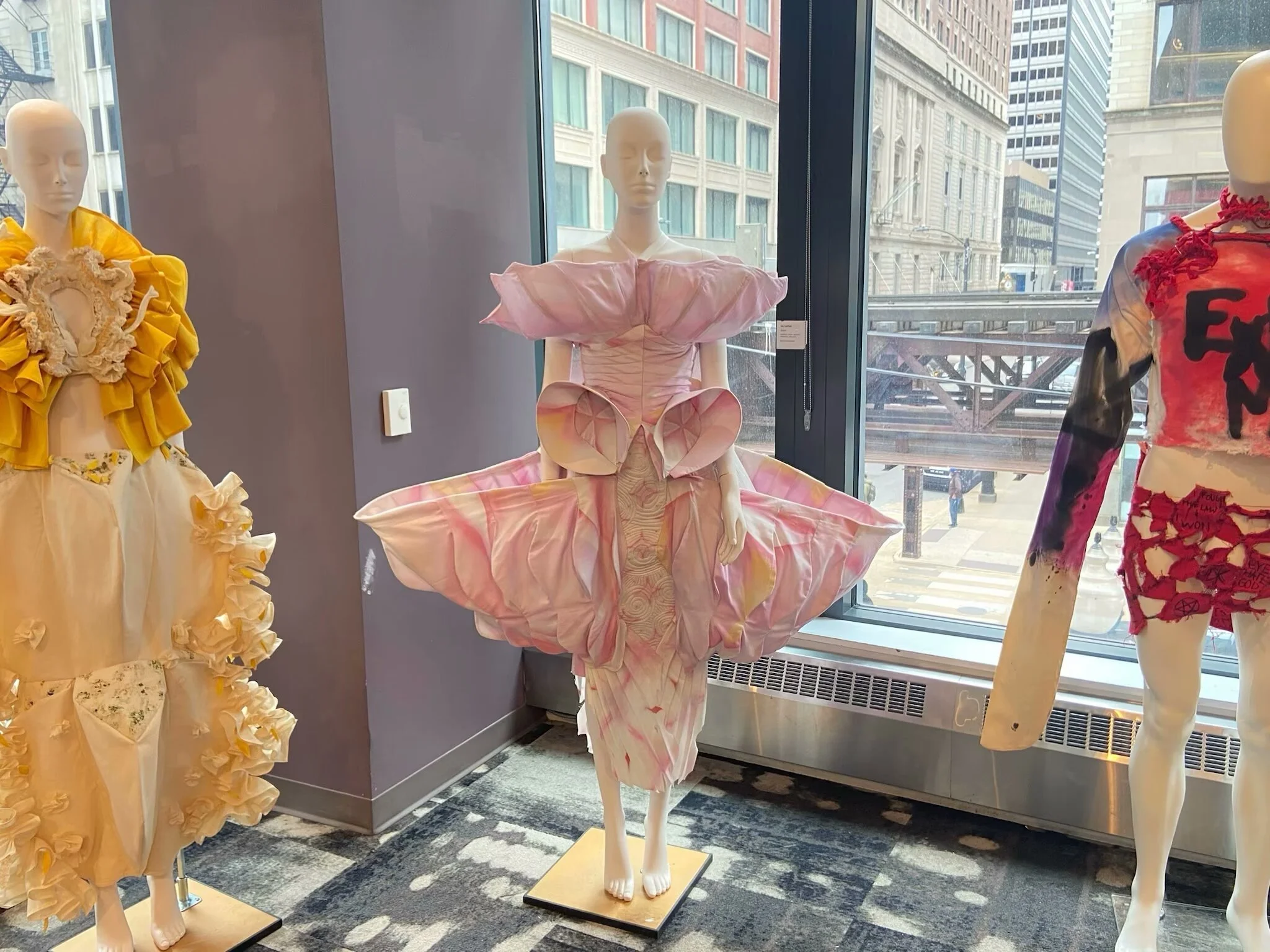
Photo: Yun Zheng
Philosophy as Fashion
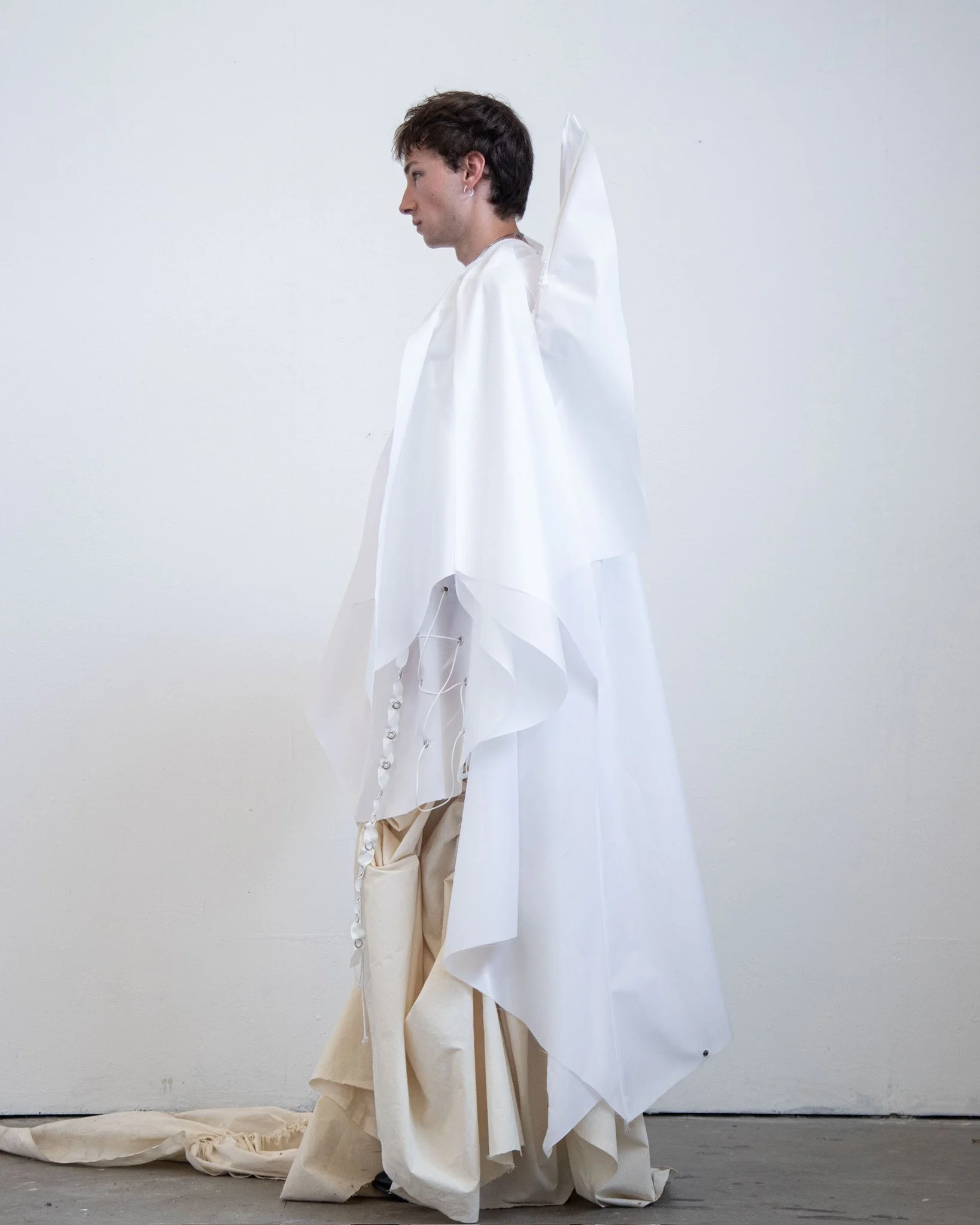
Zheng grew up with dolls, but her play was a little more complex. Born and raised in Wuhan, China, she wished to design haute couture outfits for Barbies and also studied architectural blueprints, designing lives down to minute details. A decade later, she now lives her childhood dream. Zheng uses fashion design as a visual and tangible tool to interpret life. In December 2024, she founded her brand, Pause on Earth. The label name arose from a sense of alienation, or dissociation, from her bodily experience of being alive. “I see planet Earth as just a short stop for us all. What precedes and follows life here remains in the void,” she says. Under this premise, the brand doubles as her personal chaperone to probe the present and find life’s purpose, according to Zheng.
“I was deeply touched by Pause on Earth,” says Rachel Yao, a friend from an art residency. “It takes on the perspective of an observer, much resembling Zheng’s personality when we first met—quiet and eager to absorb new information, like a sponge.” With apparel design as an expressive medium, she studies and documents the relationship between clothing, the human body and the secular world. “The body is our general medium for having a world,” she says, quoting philosopher Maurice Merleau-Ponty. Zheng draws inspiration from the philosophical school of phenomenology—a study of lived experiences.
In a print set inspired by Georgia O’Keeffe, Zheng adopts the perspective of a scallop—a goop of flesh tender yet armored, the shelly critter studies its surroundings through a slim opening. To Zheng, this quality mirrors phenomenology, resembling perfectly how the human psyche explores the world through its physical casing, the body. Amid a hazy gradient of pinks, blues and yellows, a shell replicates and regenerates. On RedNote (the Chinese social media app now harboring TikTok refugees), this print gained over 38,000 views.
Lonely Optimistic Rover/Photo: Yun Zheng
A Girl and Her Business, 7,234 Miles Apart
RedNote remains Zheng’s primary platform to reach and communicate with fans. From 2021 to the present, she posted about her life studying fashion design, a summer at Central Saint Martins, London’s renowned art and design school, and endless nights of draping mannequins. Among her 149 posts amassing, collectively, over 37,000 likes, one sparked the birth of Pause on Earth. Zheng had posted about a purse she made for a class, which “blew up!” “This [progression of events] nudged me to open shop before having time to second guess,” she says. She photographed a canvas bag bound with pink ribbons and twenty-one magnetic buttons, posted it, and got 423 comments asking for additional information.
Steven Xiong, a longtime friend now dabbling in business, encouraged her to start selling. “It’s better to learn about [production] expenses early on,” he says. “Whatever the outcome, this attempt will be valuable.” But without formal training in entrepreneurship, Zheng struggles to expand her one-girl business. In an open letter to customers, she addressed a delay in production; exactly one month later, another letter announced this project’s downfall. “Even after comparing three factories and testing a score of fabrics, we were still unsatisfied,” she wrote. “We realized that present circumstances do not simultaneously allow for high quality and a reasonable price.”
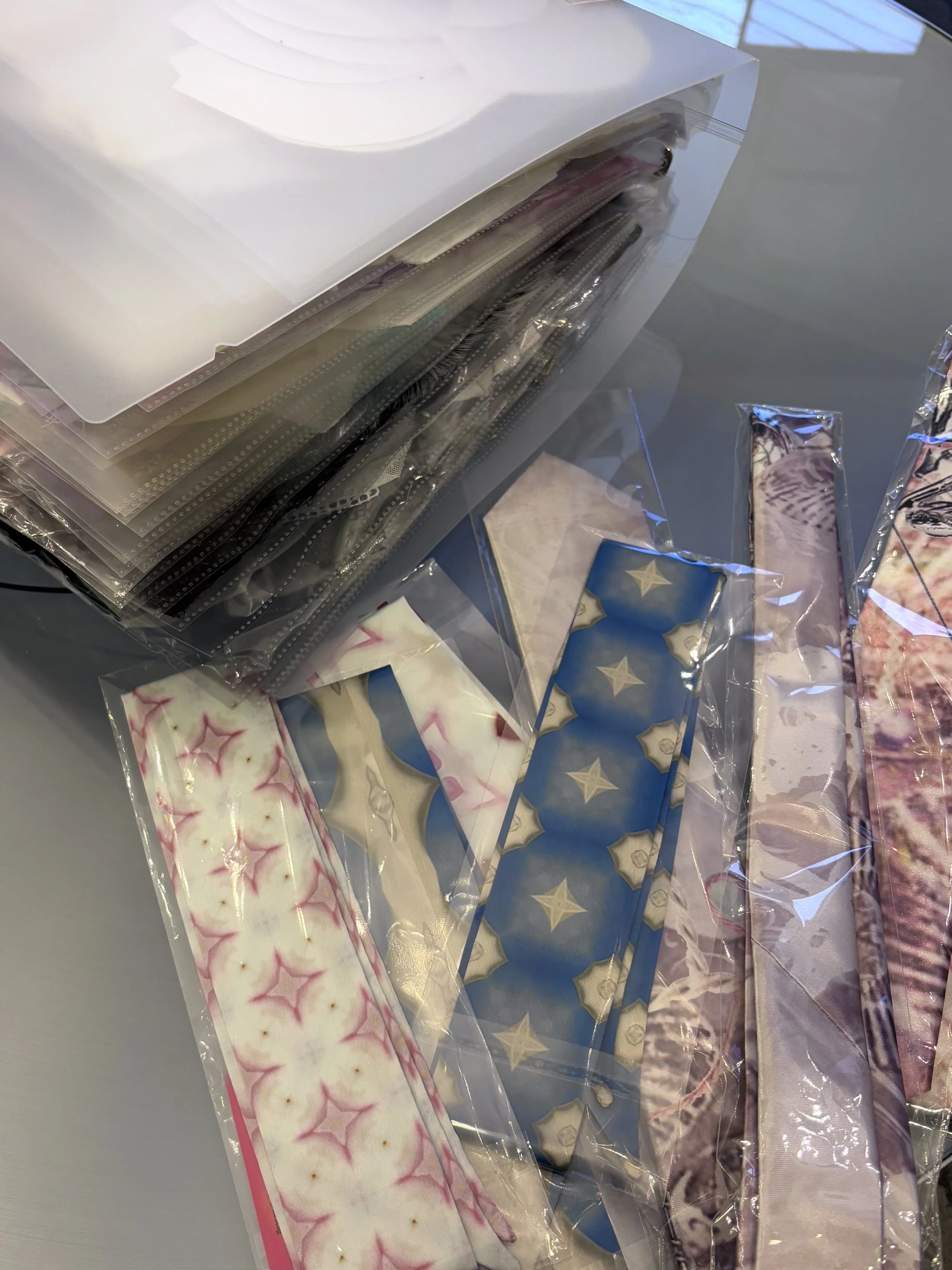
Photo: Yun Zheng
Zheng proceeded to express gratitude for her following and initiated a full refund. “We promise to reintroduce this product in the future,” she concluded. “I will not give up on this design. I intend to optimize its fabric, craft and design, and bring its best version to you once ready.” She used the words “we” and “our team” multiple times, but Zheng is tackling the conundrum herself. Fortunately, customers are understanding. “Looking forward to our next encounter,” commented buyer and RedNote user @xiaotujiaxin. “It’s not easy because I am uncompromising with quality,” she says. “I can’t put my reputation [as a fashion designer] at stake.” It’s hard enough to keep watch on a factory 7,234 miles away, not to mention keeping her promise of affordability in the meantime.
Chenfei Gu, Zheng’s friend in the same program, endorses her diligence. Even when in different classes, she knew Zheng worked early hours, weekends included. “Most of us preferred sleeping in, but she would be at the studio since morning and took projects home to finish later in the day,” Gu says. “[Zheng] approaches every task with a level of responsibility and commitment rare for someone her age,” says assisting technician G. M. Lawrence at Central Saint Martins. “She doesn’t just work hard—she works with intention.” Only a very small percentage of Chinese fashion design students at SAIC run a business, Zheng says. “It takes effort and a distinct personal style to reach an audience, not to mention growing ideas into a brand.”
Family and friends back home are temporarily overseeing shipments of other Pause on Earth items, including phone cases and neckties. Nevertheless, Zheng still monitors all sales and plans to explore the homeware sector. For now, she is talking with a Chinese bedding company about collaborating on a collection—one adorned in her iconic shell motif.
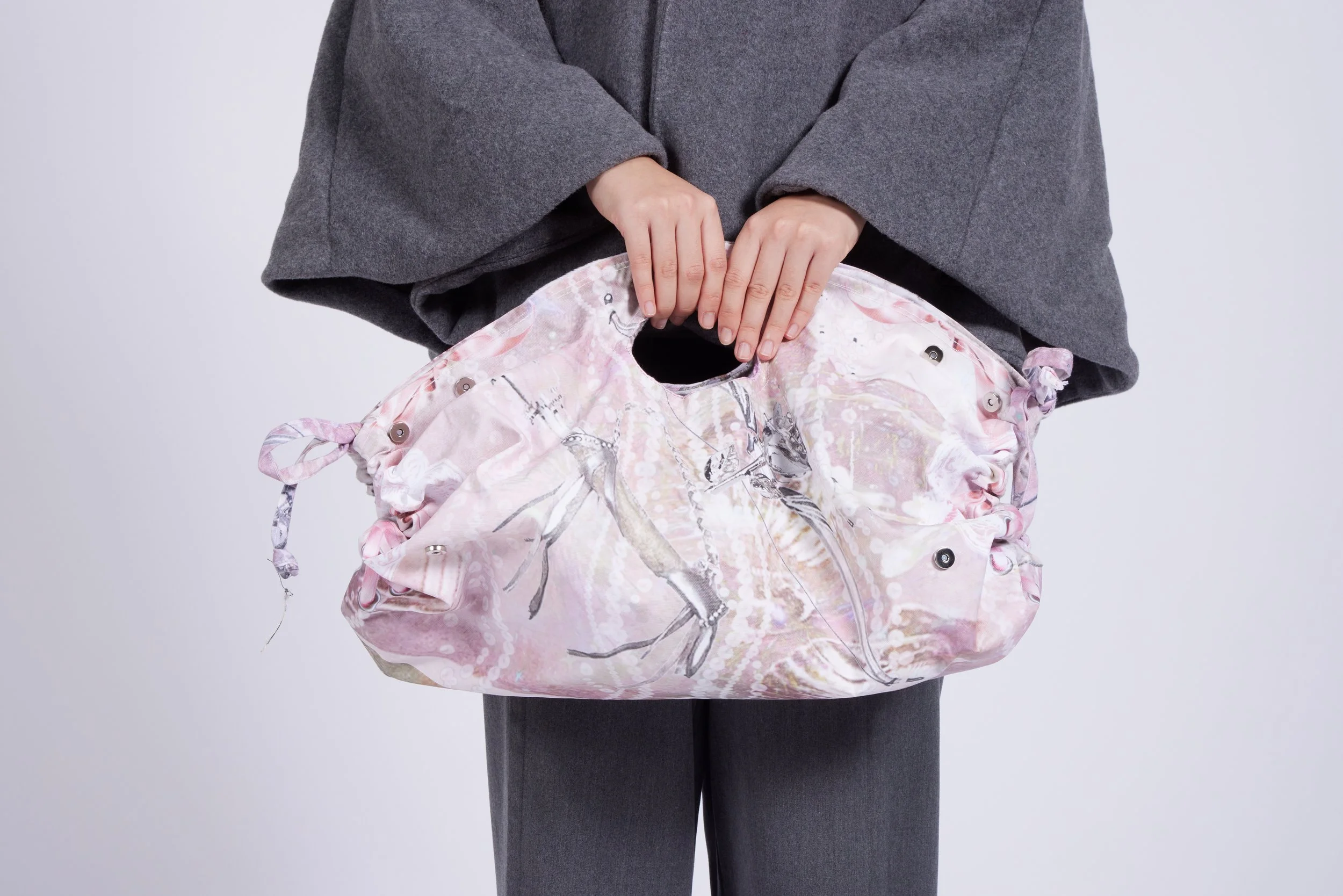
Photo: Yun Zheng
Concerns of An International Designer To Be
Enrolling in a Council of Fashion Designers of America competition, Zheng plans to develop a collection of three new looks. She welcomes pressure but values the process over any pending outcome. “Everyone was fatigued by sophomore year competitions,” Zheng says. “Now, all we want is to enjoy the creative journey.”
That’s not to say she distances herself from the fashion community. Zheng recognizes how local talents are close-knit, while resources grant more accessibility than counterparts in New York City. For instance, Chicago Fashion Coalition, FashionBar Chicago and Chicago Fashion Fest all host runways. “We can apply for display opportunities once they start recruiting for events,” she says. As an international designer, however, she finds cultural barriers hurting her growth. “Your work has to speak to everyone,” she says, pinpointing her biggest dilemma. Regardless, she is hopeful about her future. Life is “a fleeting moment to exist, create and belong,” per Zheng’s vibrantly colored, gradient-filled business card—and exist, create, belong she will.
